Why Everything Tastes Faintly of Last Night's Salmon
Quick Answer: The smell almost never lives in the basket you wash. It lives in the heating element above it, the fan housing, and the crumb tray or drip surface underneath — places grease vapor reaches and detergent doesn’t. Wipe the element cold, clean the fan grate, and run a 10-minute empty cycle with lemon and water in the basket. That combination fixes the vast majority of cases.
You washed the basket. You washed it again, by hand, with the good sponge. Tonight’s chicken still tastes vaguely of Tuesday’s fish.
The frustrating part is that the basket was never the problem. Air fryers aerosolize grease and blow it upward into parts of the machine that have no obvious cleaning access, and that’s where the smell settles in.

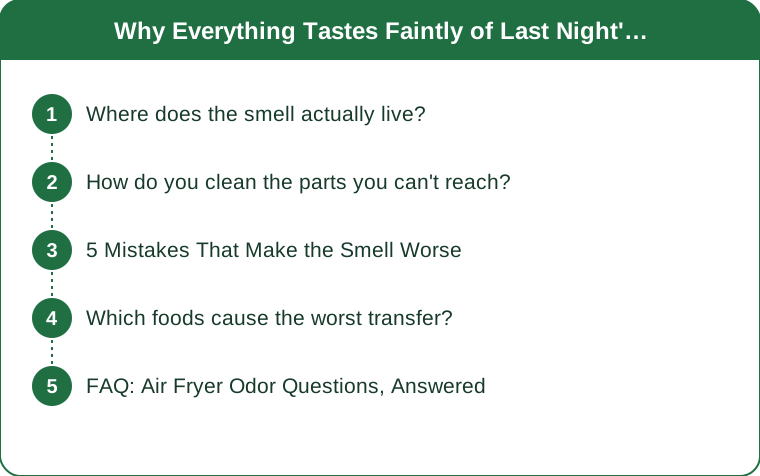
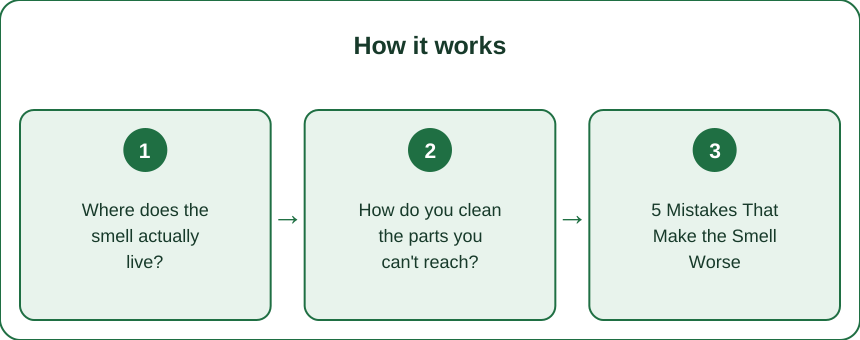
Where does the smell actually live?
Three places, in rough order of how much they contribute:
The heating element. It sits directly above the food, it gets coated in vaporized grease, and it reaches high temperature every cycle — which cooks that grease onto the coil and re-volatilizes a little of it every time you turn the machine on. This is the number one source and almost nobody cleans it.
The fan and its housing. The fan pulls air across the element and pushes it down over the food, continuously. Grease-laden air passes through it every second of every cook, and it condenses on the blades and the surrounding shroud.
Whatever sits under the basket. Depending on the model that’s a crumb tray, a drip pan, or just the floor of the drawer housing. Fat that drips through pools there, gets baked repeatedly, and eventually becomes a permanently smoking layer.
Notice that the removable basket — the one part designed to be washed — is the least important of the four surfaces involved.
How do you clean the parts you can’t reach?
The element: unplug the machine and let it cool completely. Tip the unit on its back or upside down so you can see up into the chamber. Wipe the coil with a damp cloth and a little dish soap, then again with plain water. Don’t soak it, don’t spray anything directly into the chamber, and let it dry fully before use. Do this monthly if you cook fish or bacon, quarterly otherwise.
The fan grate: with the unit still tipped, use a soft brush — an old toothbrush is ideal — on the grate covering the fan. You’ll usually get a surprising amount of brown film off. You can’t reach the blades themselves on most models, and that’s fine; the grate carries most of it.
Under the basket: pull the basket fully out and look into the empty housing with a flashlight. On many models there’s a pool of hardened fat that has never been touched. Wipe it out with a damp cloth and degreaser, being careful of the element above.
Then the reset: put a cup of water and a halved lemon in the basket and run it at 350°F for 10 minutes. The steam lifts residual film and the citrus oils genuinely help. Wipe everything down afterward while it’s still warm.

5 Mistakes That Make the Smell Worse
1. Only ever washing the basket. It’s the one part detergent reaches and the smallest part of the problem.
2. Using the dishwasher for a basket with a nonstick coating. Repeated dishwasher cycles degrade the coating, and a degraded surface is porous — it holds onto odor far more than an intact one does, which means the fix accelerates the problem.
3. Spraying cleaner into the chamber. Liquid on or around the element is a genuine electrical hazard, and residue burns onto the coil and creates a new smell. Damp cloth only.
4. Cooking fish and then immediately closing the drawer. Trapped warm, humid, grease-laden air condenses on every interior surface as it cools. Leave the drawer open for twenty minutes after a strong-smelling cook.
5. Ignoring the vents on the back. The fifth one is the sleeper — the exhaust vent accumulates a film that most people never look at, and because air passes through it on every cycle, it re-scents the whole machine. Wipe it when you do the element.
Which foods cause the worst transfer?
Not the strongest-smelling ones, necessarily — the fattiest ones. Odor transfer travels in aerosolized fat, so the food that spatters most is the food that leaves the most behind.
The reliable offenders: salmon and oily fish, bacon, chicken thighs with skin, and anything heavily marinated in garlic or curry paste, because those compounds are fat-soluble and go wherever the fat goes.
Things that barely register: vegetables, tofu, frozen items with a dry coating, and anything cooked in a liner.
The practical scheduling move is to sequence your week — cook fish last before a cleaning cycle rather than first. And if you cook fish often, a parchment liner with holes dramatically reduces spatter reaching the element. It doesn’t eliminate it, but it cuts the main input.
One genuine warning: never put a liner in an empty preheating fryer. With nothing weighing it down, it lifts into the element and catches fire. Food on top, always.
FAQ: Air Fryer Odor Questions, Answered
Does baking soda in the basket overnight work?
Mildly, and only for the basket. An open dish of baking soda absorbs some odor from the enclosed air, but it does nothing about grease baked onto the element, which is the actual source. Use it as a supplement, not a solution.
My air fryer smokes now. Is that the same problem?
Same cause, further along. Smoking almost always means accumulated fat under the basket or on the element has reached its smoke point. Clean both thoroughly. If it still smokes with a clean machine and low-fat food, the nonstick coating may be breaking down, which is a replace-it signal.
Is the plastic housing absorbing the smell?
Rarely, though people assume so. Odor that survives a proper element-and-fan cleaning is usually from a spot that was missed — check the exhaust vent and the seal around the drawer. Genuinely odor-saturated plastic happens mostly in machines that have been smoking for months.
TL;DR:
- The smell lives in the heating element, fan grate, and the surface under the basket — not the basket you keep washing.
- Unplug, cool, tip the unit, and wipe the element and fan grate with a damp cloth only. Never spray.
- Finish with a 10-minute empty run at 350°F with water and lemon, then wipe warm.
- Fat, not smell, is what transfers — salmon, bacon, and skin-on chicken are the real culprits.
- Leave the drawer open for 20 minutes after strong cooks so grease-laden air doesn’t condense inside.
Clean upward, not just downward. Ten minutes on the element does more than a month of scrubbing the basket.
Keep Reading
This article is for general informational purposes only and is not medical advice. Always consult a qualified health professional for guidance specific to you.