Air Fryer Batch Cooking: A Week of Lunches in Under an Hour
Quick Answer: Batch cook in the air fryer by running three to four sequential loads of components rather than complete meals - protein first, dense vegetables second, quick vegetables third, and a grain cooked separately on the hob while the fryer runs. Around 55 minutes of mostly hands-off time produces five mix-and-match lunches, and components reheat far better than assembled meals do.
Most air fryer advice assumes you are cooking one portion right now. That is a genuine strength of the machine, but it means the batch-cooking case gets ignored - and a small basket is not actually the obstacle people assume.
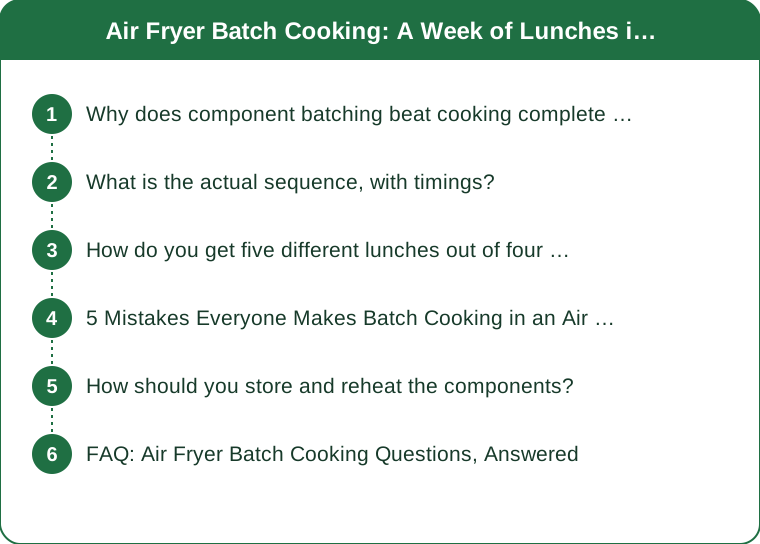
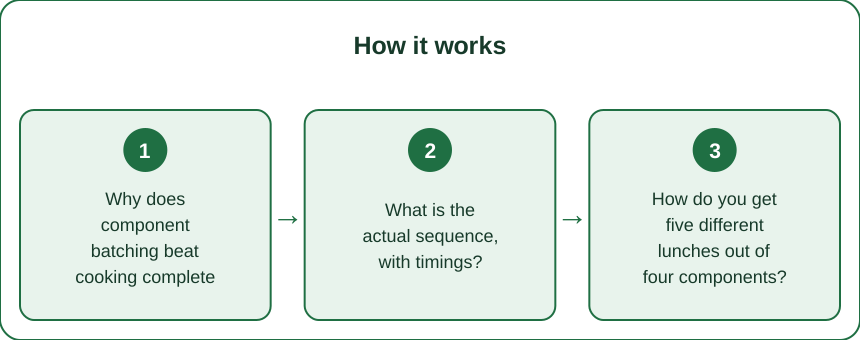
Why does component batching beat cooking complete meals?
Because reheating is where meal prep usually falls apart, and components survive it far better than assemblies do.
A fully assembled meal reheats as a single unit, which means the sauce, the grain, and the vegetables all get the same treatment. The vegetables overcook, the grain dries, and by Wednesday it tastes like leftovers. Components stored separately let you reheat only what needs heat and dress the rest fresh.
The practical advantages:
- Variety without extra cooking. Four components combine into five noticeably different lunches, so you are not eating the same thing five times.
- Better texture. Roasted vegetables reheated alone in the air fryer for three minutes come back genuinely crisp. The same vegetables reheated in a sauce do not.
- Flexibility. If Thursday turns out differently than planned, components adapt. A pre-assembled bowl does not.
- The small basket stops mattering. You were never trying to fit five meals in at once - just one component at a time.
The one real trade-off is a few more containers to wash. Against that, you get five lunches that do not taste progressively worse across the week.
What is the actual sequence, with timings?
The order matters, because it lets residual heat and smell work in your favour and avoids a preheat between every load.
Before you start (5 minutes): put a grain on the hob - rice, quinoa, or couscous - and set a timer. It cooks unattended while the fryer works. Chop everything now, in one go, rather than between loads.
Load 1 - Protein (18 to 22 minutes). Chicken thighs at 190°C for 18 to 20 minutes, turning once, or firm tofu cubes at 200°C for 15 minutes. Protein goes first because the basket is cleanest and because any residual fat helps the next load.
Load 2 - Dense vegetables (18 to 20 minutes). Sweet potato, squash, carrots, or beetroot at 190°C for 18 minutes, shaking twice. Cut to roughly 2cm cubes - consistency of size matters far more than exact dimension.
Load 3 - Quick vegetables (8 to 12 minutes). Broccoli, peppers, courgette, green beans, or mushrooms at 200°C for 8 to 10 minutes. These go last because they need the least time and suffer most from sitting around.
Optional Load 4 - Chickpeas (12 to 15 minutes). Drained, dried thoroughly, tossed in oil and spice, at 200°C. They add crunch and hold up well for about three days.
Total: roughly 55 minutes, of which maybe 15 is hands-on. The rest is chopping, packing, and washing up as you go.
How do you get five different lunches out of four components?
Change the sauce and the format, not the ingredients. This is where the variety actually comes from.
Monday - Grain bowl. Grain base, protein, both vegetables, tahini-lemon dressing.
Tuesday - Wrap. Same components chopped smaller, into a flatbread with yoghurt and harissa. Chopping smaller genuinely changes how it eats.
Wednesday - Big salad. Cold components over leaves, with the chickpeas for crunch and a sharp vinaigrette. Skip reheating entirely.
Thursday - Warm bowl with an egg. Reheat components in the air fryer for 3 minutes at 180°C, add a soft-boiled egg, chilli oil.
Friday - Fried rice style. Everything into a hot pan with the leftover grain, soy, and whatever aromatics you have. This is the clear-out day and it uses whatever is left in whatever quantity.
Three sauces cover the whole week, made in five minutes on prep day:
- Tahini-lemon: tahini, lemon juice, water, garlic, salt
- Yoghurt-herb: yoghurt, chopped herbs, lemon, olive oil
- Soy-ginger: soy, rice vinegar, grated ginger, sesame oil, a little honey
Store them separately in small jars. Dressed components go soft within a day; undressed ones last the week.
5 Mistakes Everyone Makes Batch Cooking in an Air Fryer
1. Overcrowding the basket to save a load. This is the big one and it defeats the entire purpose of the machine. Air fryers work by circulating hot air, and a packed basket blocks circulation - you get steamed, pale vegetables instead of roasted ones. Single layer, some visible gaps. Two properly loaded batches beat one crammed one, every time, and take barely longer.
2. Not drying vegetables before oiling. Wet surfaces steam before they brown. Pat everything dry, especially anything washed or tinned. Chickpeas in particular need to be properly dry or they never crisp.
3. Cutting inconsistently. A basket with 1cm and 3cm pieces produces burnt small bits and undercooked large ones. Uniform size matters more than the specific size you choose.
4. Packing containers while everything is hot. Steam condenses, collects at the bottom, and by Tuesday the vegetables are sitting in water and have gone soft. Cool for 20 minutes on the tray, then pack. This single step does more for week-long quality than anything else here.
5. Storing dressed instead of dressing at eating time. Dressing draws moisture out and softens texture within hours. Keep sauces in separate small containers and combine at the last moment.
The fourth one is the quiet week-ruiner - everything can be cooked perfectly and still be disappointing on Wednesday because it was packed warm.
How should you store and reheat the components?
Storage decisions determine whether Friday’s lunch is as good as Monday’s.
Containers: glass, with the components separated - either separate small containers or a divided one. Glass genuinely matters here because it does not hold odours and it reheats without transferring anything.
Fridge life, realistically:
- Cooked chicken or tofu: 3 to 4 days
- Roasted dense vegetables: 4 to 5 days
- Quick vegetables: 3 days, and honestly best in the first two
- Chickpeas: 3 days, though they soften after day one
- Cooked grains: 3 to 4 days, cooled quickly and refrigerated promptly
If you want lunches for a full five days, cook the quick vegetables in two smaller batches - one on prep day, one mid-week. It costs ten minutes on Wednesday and noticeably improves Thursday and Friday.
Reheating: the air fryer at 180°C for 3 to 4 minutes restores texture better than a microwave, which is the main practical reason to store components separately in the first place. Grains reheat better with a tablespoon of water and a lid, in the microwave - the fryer dries them out.
Cool cooked rice quickly and refrigerate within an hour, then reheat thoroughly and only once. Rice storage is the one food safety point here worth being careful about.
FAQ: Air Fryer Batch Cooking Questions, Answered
Is an air fryer big enough for real meal prep?
For component batching, yes - you are cooking one component at a time, not five meals at once. A 4 to 5 litre basket handles roughly 500g of vegetables per load comfortably in a single layer.
Does running four loads back to back damage the machine?
No. Air fryers are designed for continuous operation and most handle an hour of sequential loads without issue. You will not usually need to preheat between loads, which saves time.
Should I preheat for every batch?
Only the first. After that the machine is already at temperature, so you can go straight into the next load - which is one of the main reasons the sequential method is fast.
Which vegetables do not work well for batch prep?
Anything with very high water content that goes limp - courgette is borderline, and salad vegetables obviously do not roast. Leafy greens are best added fresh at eating time rather than cooked in advance.
How do I stop everything tasting the same by Wednesday?
The sauces do that work, not the cooking. Three distinctly different sauces and two different formats - bowl, wrap, salad - is enough variation that the repeated base ingredients stop registering.
TL;DR:
- Batch components, not complete meals - they reheat far better and recombine into different lunches
- Sequence: protein, dense vegetables, quick vegetables, optional chickpeas, with a grain on the hob alongside
- Roughly 55 minutes total, about 15 of it hands-on
- Single layer with visible gaps, everything dried before oiling, uniform cut sizes
- Cool 20 minutes before packing and store sauces separately - this is what keeps Friday as good as Monday
The small basket was never the limitation people think it is. Cooking one thing at a time is exactly what the machine is best at, and stacking four fast loads back to back turns that into a week of lunches for about the time it takes to watch an episode of something.
Keep Reading
This article is for general informational purposes only and is not medical advice. Always consult a qualified health professional for guidance specific to you.