Air Fryer Liners: Which Ones Are Safe and Which Wreck Your Airflow
Quick Answer: Perforated parchment liners and silicone liners are both safe if they are rated for your cooking temperature and never go in during a preheat while empty. The problem is airflow - a solid liner blocks the bottom of the basket, so food steams instead of crisping. Use perforated liners for anything sticky, and no liner at all for anything you want genuinely crisp.
Liners look like a free win. Less scrubbing, no marinade welded to the basket, and the pan looks new for longer. Then your chips come out pale and slightly floppy and you blame the potatoes.

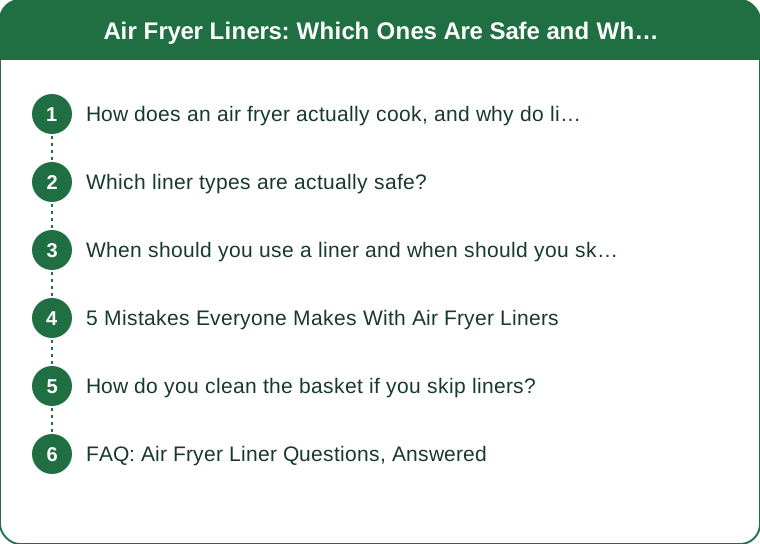
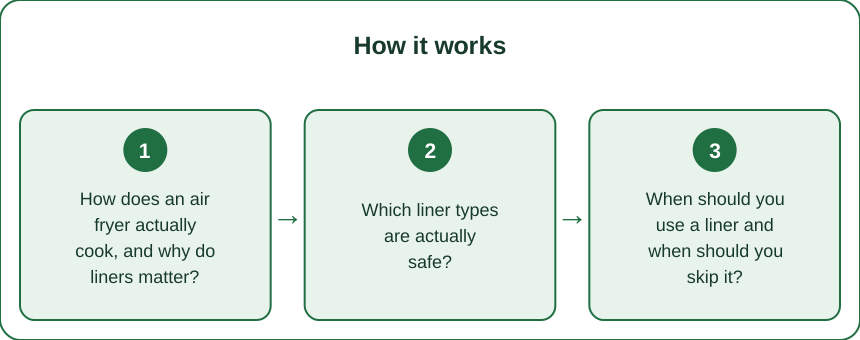
How does an air fryer actually cook, and why do liners matter?
An air fryer is a small convection oven with an aggressive fan. Hot air is driven down over the food and then has to pass through and around the basket to circulate back to the element.
That return path runs through the perforated base of the basket. It is not a drainage feature - it is a core part of the airflow design.
So when you put a solid sheet in the bottom of the basket, you have changed the machine. Air can no longer pass beneath the food, moisture released by cooking has nowhere to go, and it collects in a shallow pool under whatever you are cooking.
The result is predictable:
- The underside stays soft while the top browns
- Cooking takes longer for the same result
- Anything battered or breaded goes soggy at the base
- Steam accumulates, which is exactly what you use an air fryer to avoid
This is why the same recipe works for one person and fails for another. Solid liner versus perforated liner is often the entire difference, and no amount of temperature adjustment compensates for a blocked base.
Which liner types are actually safe?
Three main options, with different limits.
Perforated parchment liners. Purpose-made rounds and squares with holes. Usually rated to around 220C, which covers almost all air fryer cooking. Safe and the best compromise - you keep most of the airflow and lose most of the mess.
Silicone liners and baskets. Food-grade silicone is generally rated to 220 to 260C. Reusable, dishwasher safe, and available in perforated designs. Safe within the rating, but the solid versions block airflow badly and the thick material slows heat transfer to the base of the food.
Plain parchment cut to fit. Fine if the parchment is rated above your cooking temperature and you cut it smaller than the basket base and punch holes in it. Check the box - most household parchment is rated around 200 to 220C, and some is lower.
What not to use:
- Aluminium foil pressed into the base. It blocks airflow completely, can be picked up by the fan if loose, and acidic foods like tomato and lemon react with it.
- Wax paper. It is not heat-rated; the wax melts and can smoke.
- Kitchen paper or napkins. A genuine fire risk near a heating element.
- Any liner during an empty preheat. With no food weighing it down, a light liner can lift into the element. This is the single most common way liners cause a real problem.
- Any liner larger than the basket base, curling up the sides where it can touch the element.
When should you use a liner and when should you skip it?
Match the liner to the food, and the trade-off becomes easy.
Use a perforated liner for:
- Sticky glazes and marinades - teriyaki, barbecue, honey. The cleanup saving is real and these foods are not relying on base crispness.
- Fish and delicate items that tear when you lift them off the basket.
- Baked items - muffins, small cakes, cookies - where you want no direct contact.
- Anything crumbing badly that would fall through and burn onto the drawer.
Skip the liner entirely for:
- Chips and roast potatoes. Direct contact with the hot perforated basket is where the base crisping comes from.
- Breaded and battered food. The whole point is a dry, crisp coating on all sides.
- Tofu, halloumi, and anything you want with a firm crust.
- Vegetables you want browned rather than steamed.
A middle option many people miss: cook without a liner, and line the drawer beneath the basket instead if your model has one. You catch the drips, keep the airflow through the basket completely intact, and still avoid most of the scrubbing.
The general rule: if crispness on the underside matters, no liner. If cleanup is the priority and the texture is not, perforated liner.

5 Mistakes Everyone Makes With Air Fryer Liners
Mistake 1: Putting the liner in during the preheat. Empty and unweighted, a paper liner can lift and touch the element. Always preheat empty and add the liner with the food already on it.
Mistake 2: Using a solid liner and blaming the recipe. Pale, soft-bottomed results after following instructions exactly are usually a blocked base. Before adjusting time or temperature, take the liner out and repeat the same recipe.
Mistake 3: Buying liners that are too big. A liner that reaches up the sides of the basket restricts airflow around the food and risks contact with the element. It should sit flat on the base and be smaller than it, leaving a visible margin.
Mistake 4: Assuming all silicone is equal. Cheap silicone with fillers can degrade and smell at high temperatures. Look for a stated food-grade rating and a maximum temperature above your usual cooking range. The third mistake is the most common, but this one is the one that makes people think their air fryer has a fault.
Mistake 5: Reusing a paper liner. After one cook the paper is grease-saturated and structurally weaker, which makes it more likely to lift and more likely to scorch. Perforated paper liners are single use; if you want reusable, buy perforated silicone instead.
How do you clean the basket if you skip liners?
Because the honest answer to the liner question is often just no liner, here is the cleanup that makes that easy.
Clean while it is warm, not cold. Grease that has cooled and set takes five times the effort. Give it ten minutes to become handleable and then wash it.
The soak that does the work for you. Fill the basket with hot water and a drop of washing-up liquid, leave for 15 minutes, then wipe. Most baked-on residue lifts without scrubbing.
For stubborn burnt-on patches: a paste of bicarbonate of soda and a little water, left on for 20 minutes, then a soft brush. Do not use metal scourers or steel wool on non-stick coatings - once the coating is scratched, everything sticks to that spot permanently and you will need liners forever.
Do not forget the element. Splatter builds up on the heating element above the basket and it is the usual reason an air fryer starts smoking. Unplug, let it cool completely, and wipe the element gently with a damp cloth every few weeks.
Check the dishwasher rules for your model. Many baskets are dishwasher safe but repeated cycles are harder on non-stick than hand washing. Hand washing a warm basket takes about ninety seconds, which is usually faster than loading it anyway.
Wipe the drawer after anything fatty. Accumulated fat in the drawer is what produces the smoke and smell that people mistake for a broken machine.
FAQ: Air Fryer Liner Questions, Answered
Is parchment paper safe in an air fryer?
Yes, if it is rated above your cooking temperature, cut smaller than the basket base, and added with the food on top rather than during an empty preheat. Check the box for the temperature rating rather than assuming.
Can I use foil in an air fryer?
It is best avoided in the basket base because it blocks airflow and can lift into the fan. If you must use it, keep it weighted with food, well clear of the element, and away from acidic ingredients like tomato and citrus.
Do liners make food less crispy?
Solid liners noticeably do, because they block the airflow under the food and trap steam. Perforated liners cost you a little crispness on the base and are usually a fair trade for sticky foods.
Are silicone liners better than paper?
They are reusable and hold up well, which is better for cost and waste. Choose a perforated design and check the temperature rating. For maximum crispness, no liner still wins over both.
TL;DR:
- The perforated basket base is part of the airflow design, not just drainage
- Perforated parchment and rated silicone are safe; foil in the base, wax paper, and kitchen paper are not
- Never add a liner during an empty preheat - it can lift into the element
- Use liners for sticky glazes, fish, and baking; skip them for chips, breaded food, and anything you want crisp
- Lining the drawer instead of the basket keeps airflow intact and still catches the mess
Most disappointing air fryer results are an airflow problem wearing a different costume. Get the liner decision right for each food and the machine goes back to doing the one thing it is genuinely excellent at.
Keep Reading
This article is for general informational purposes only and is not medical advice. Always consult a qualified health professional for guidance specific to you.